How one filming day becomes 144 videos for a med spa

The short answer
One day works because the year is planned before anyone presses record. We write 140 to 150 short scripts from a 20-question intake with the provider, group them by outfit and set, film them in half-hour blocks over four to six hours with a teleprompter, then edit and post at least 12 videos a month for twelve months.
A TV drama does not film one episode a week. The cast records the whole season in one production block, then the network airs it every Sunday while the actors are off doing something else. That is the model. Most med spa owners have tried the other one, filming week to week, and it lasts about three weeks before the schedule fills up, the injector who was filming leaves, and the feed goes quiet. The problem is not effort. Content fights with patients for the same hours on the same face.
Batch filming ring-fences one day a year where the injector is not competing with patients for chair time. Content gets done once, then drips out while the clinic runs at full speed. Here is exactly how we run that day, so you can copy the process yourself or see what you would be paying someone to do.
From one day to twelve months
- 1
Intake
90 minutes with the provider: 20 questions in five groups.
- 2
Scripts
140 to 150 short scripts, grouped by outfit and set.
- 3
Shoot day
Four to six hours, remote, teleprompter, live direction.
- 4
12 months
At least 12 edited videos a month, scheduled and posted.
Step 1: the intake that writes the year
Everything depends on the questions patients actually ask, and on what the provider is willing to say out loud. The intake is 90 minutes and 20 questions in five groups. We record it, because the provider's own phrasing becomes the scripts.
Money and priorities
- Your top three revenue procedures over the last 12 months
- The three procedures you want more of next year
- Which treatments are already overbooked and should not be promoted
- Ideal spend per visit and per year for the patient you want
Patient avatars
- Your perfect patient: age, life stage, job, which suburbs
- The three sentences they say when they first sit in the chair
- What they are afraid of looking like, as examples, not adjectives
- The platforms they open every day
Questions and objections
- The ten questions you answer every week about toxin, filler and skin
- The red-flag questions that make you say no
- The TikTok myths that drive you crazy
- What a partner or friend says that talks a patient out of booking
Rules and red lines
- What you will never do clinically
- Your philosophy on natural versus done
- Words and claims your regulator forbids
- Topics that stay off camera
Stories and proof
- Your three favourite transformations, told as stories
- One case that went wrong somewhere else and you fixed
- What has changed in your own face over ten years
- Awards, fellowships and training other injectors do not have
The rules group matters most. A provider saying "I will not overfill lips on a first visit, here is why" is more persuasive than any before-and-after, because it tells a stranger how you think.
Step 2: 150 scripts before the camera turns on
A city designs the subway map once, lays the tracks in one push, and trains run on it for years. Scripting is the track-laying. Once the 140 to 150 scripts exist, nobody has to decide what to say on a Tuesday.
Every script follows one template, built on the three jobs a short video has to do: hook, retain, reward (Hormozi, $100M Leads, p. 75 to 76). Ours runs 20 to 45 seconds and 45 to 80 words.
- 1
Hook
One line, ten words or fewer. Names the patient and adds tension.
- 2
One idea
Two or three sentences. One point only. If a second idea turns up, it becomes its own script.
- 3
Micro-proof
Optional. One sentence of evidence: a case, a number you can back, a pattern you see in your chair.
- 4
Next step
One action. The same action across most of the year, so patients remember it.
Filled in, at 69 words: "First-time lips? Here's how I keep you safe. On a first visit I never chase your end-goal lips. I start with a small, balanced change so you can still recognise yourself in the mirror tomorrow. Shape first, volume later. Most of my corrections are fixing overfilled first appointments from elsewhere. If you want a conservative first-time plan, send us LIPS in a DM."
The scripts fall into five buckets with a fixed ratio per 12 posts, so nobody is guessing what to post and the feed never tilts into a month of sales pitches.
| Bucket | Per 12 posts | Example titles |
|---|---|---|
| Rules and philosophy | 3 | Why I refuse to dissolve your whole face in one visit. My 3 rules for natural but noticeable lips. |
| Myths and education | 3 | Filler does not stretch your skin the way you think. Botox vs filler: which actually softens lines? |
| Case stories | 3 | From tired teacher to I finally look rested: a tear trough case. What 3 years of small consistent tweaks looks like. |
| Safety, FAQ and process | 2 | Numbing, needles and bruises: what really happens on toxin day. Exactly what happens in your first consult, minute by minute. |
| Offers and CTAs | 1 | September: full-face assessment slots, 12 spots only. DM PLAN for a personalised 12-month injectables map. |
If you want more topic prompts for the myth and education bucket, we keep a running list in reel ideas for injectors.
Step 3: the shoot day
The provider blocks four to six hours with no patients booked. We join remotely and run the teleprompter, so nobody memorises anything. Scripts are grouped by outfit and background: two blocks of 18 talking-head scripts per outfit gives 36 per look, and three outfits give around 108 videos without touching the lighting or framing. Pickups and b-roll make up the rest.
The run sheet for a five-hour day
| Time | Outfit and set | What we film |
|---|---|---|
| 0:00 | Setup | Gear, light, framing, sound. Three throwaway warm-up takes. |
| 0:30 | Outfit 1, white coat, consult room | 8 rules and philosophy, 4 safety |
| 1:00 | Outfit 1, consult room | 10 myths, with a five-minute break inside the block |
| 1:30 | Outfit 2, neutral top, procedure room | 8 case stories told as narrative (no patient images), 4 process |
| 2:00 | Outfit 2, procedure room | 10 FAQs rapid fire, then 10 minutes of b-roll: walking in, gloves on, opening syringes. No needles on camera where local rules forbid it. |
| 2:30 | Break | Ten minutes. Check the tracking sheet for missed must-haves. Move furniture for variety. |
| 3:00 | Outfit 3, darker top, plain background | 8 offers and CTAs, 4 "why I say no" |
| 3:30 | Outfit 3, plain background | 12 short myth busts, 10 to 20 seconds each |
| 4:00 | Pickups | Re-film the weak takes. Alternate hooks for the six to eight scripts we expect to perform best. |
| 4:30 | Team and environment | Reception, hallway, skincare wall, greeting a stand-in patient at the door. |
The kit, and why each piece is there
- A 4K phone or mirrorless camera, because patients judge clinical skill by image clarity whether that is fair or not
- A sturdy tripod, because micro-shake reads as DIY
- A phone or tablet teleprompter mounted at the lens, so eye line stays on the patient
- A lavalier mic with spare batteries, which kills the room echo that makes a clinic sound empty
- Two softbox or panel lights on stands, for even light on skin with no harsh shadows under the eyes
- A neutral backdrop or a clean wall
- A stool with a back, because posture collapses after four hours on a backless one
- Extension cord and power strip
- Gaffer tape for cables and foot marks, so framing is identical after every break
- A laptop with the scripts and a cloud backup, which is the prompter's source of truth
- Blotting papers, powder and lip balm
- Printed consent forms and the shot list
Step 4: editing that respects the category
Aesthetics is a trust business, so the edit should feel calm and considered. Our edit spec is fixed so 144 videos look like one clinic rather than 144 moods.
- Captions large and high contrast: white text on a charcoal band, 80 to 90 characters per frame, so they read on a phone held at arm's length
- Provider framed mid-chest up, face clearly visible, eyes in the top third
- Clinic logo bottom-right, small, on every video
- No trending audio and no meme sound effects. Approved music only, under the voice
- Every video checked against the claims rules before it is scheduled. Those rules are in our before-and-after guide
Approval, batch by batch
We deliver in batches of 24 edited videos, which is two months of posting. Editing takes five business days per batch. Each reviewer gets 48 hours, and silence counts as approval, otherwise one busy week stalls the whole year.
- 1
Editor delivers
Unlisted previews for all 24, with two thumbnail options each.
- 2
Clinical reviewer checks
An RN or MD, never the marketer, checks claims, anatomy language and compliance. This happens before the injector sees the batch.
- 3
Injector reviews tone
Only for "I would never say it that way." Two rounds maximum.
- 4
Social manager finalises
Captions, posting order and the CTA keyword on each video.
Step 5: posting and learning
At least 12 videos go out each month. The schedule below is our working one for a local clinic with 9 to 5 hours, posted in the clinic's own time zone. It is a starting point, and the monthly review moves it.
| Platform | Cadence | Time of day |
|---|---|---|
| Instagram Reels | 3 a week | 7:30 to 8:30 pm |
| Instagram carousel | 1 a week | 11:30 am to 1 pm |
| Instagram Stories | 2 to 6 a day | 8 am, 1 pm, 7 pm |
| TikTok | Mirrors Reels, same day | 8 to 9 pm |
| YouTube Shorts | 2 a week | 6 to 7 pm |
| Best 2 Reels of the week, reposted | 7 to 8 pm |
One CTA path everywhere. One link in the bio, or one DM keyword with an auto-reply behind it, and the same spoken call to action in roughly 80% of the videos. Patients remember "send us PLAN" after the fifth time. They do not remember five different offers.
On the first Monday of each month we export the last 30 days, sort the reels by saves, shares and profile visits, and mark the top 10%. Those topics get cloned as new scripts for the next pickup session and as new ad variants. If your ads are underperforming, this is usually where the fix starts, which we cover in why med spa Meta ads stop working.
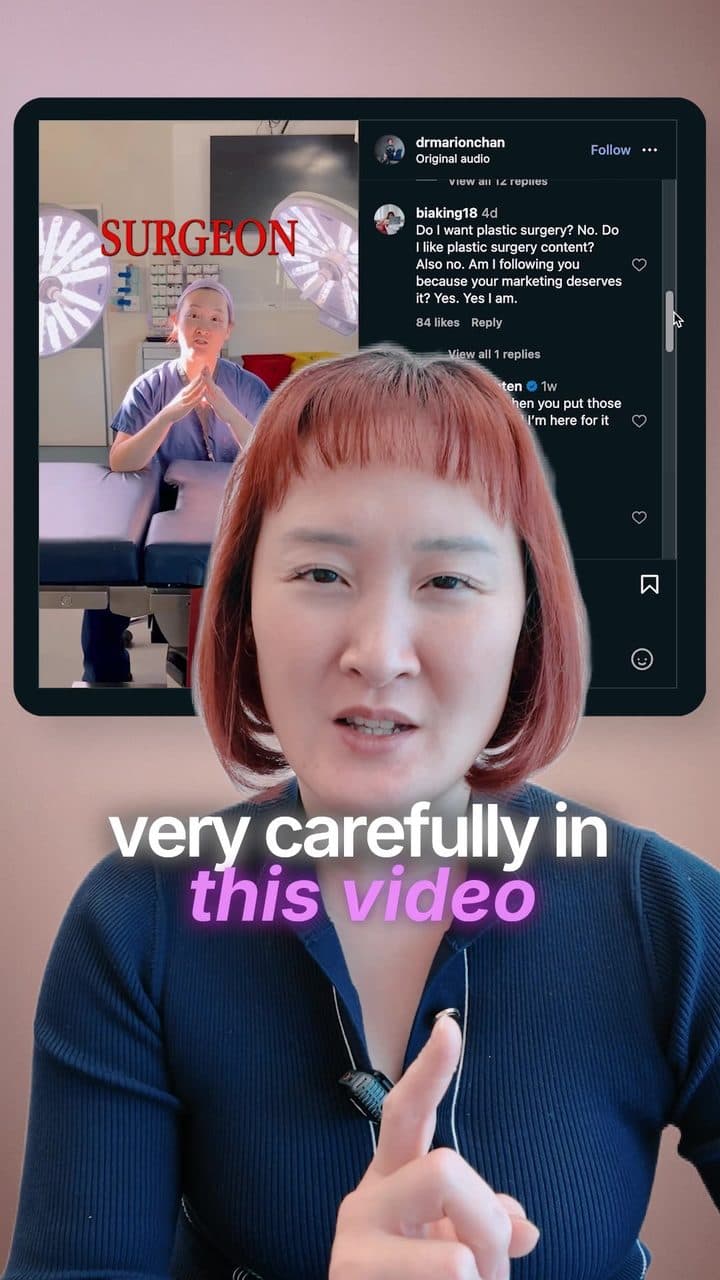
What one day actually produced for a surgeon
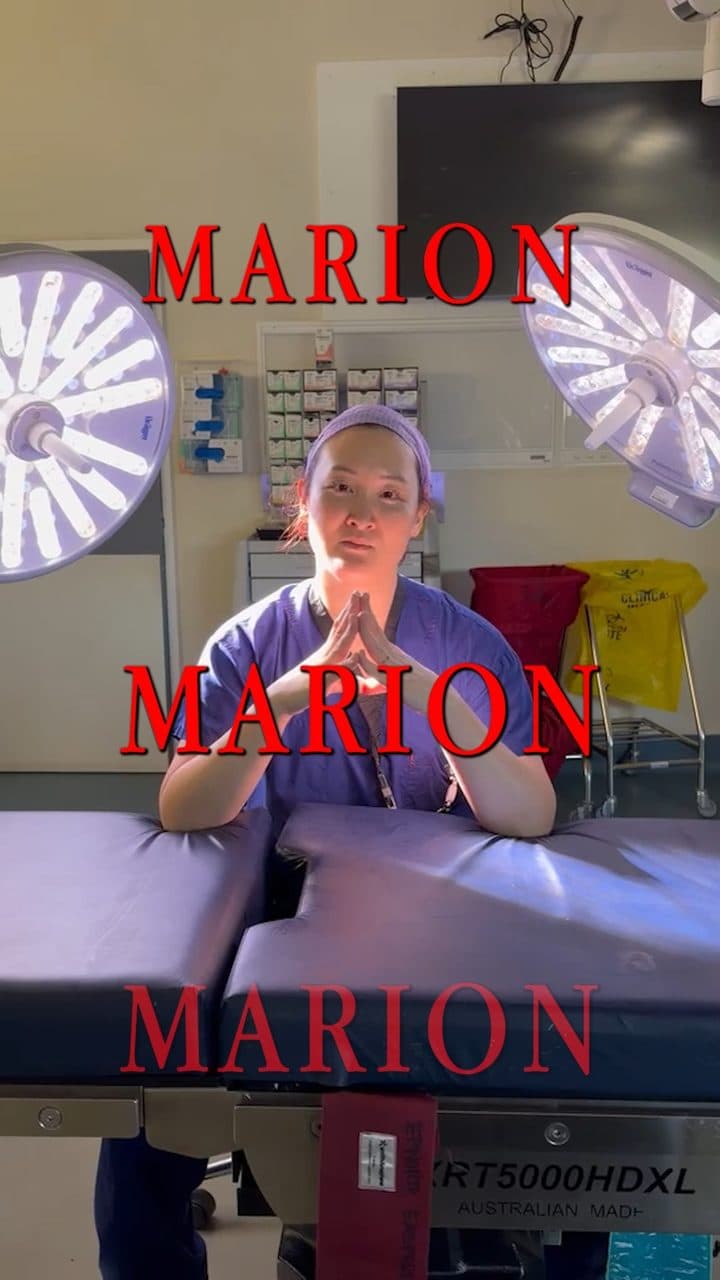
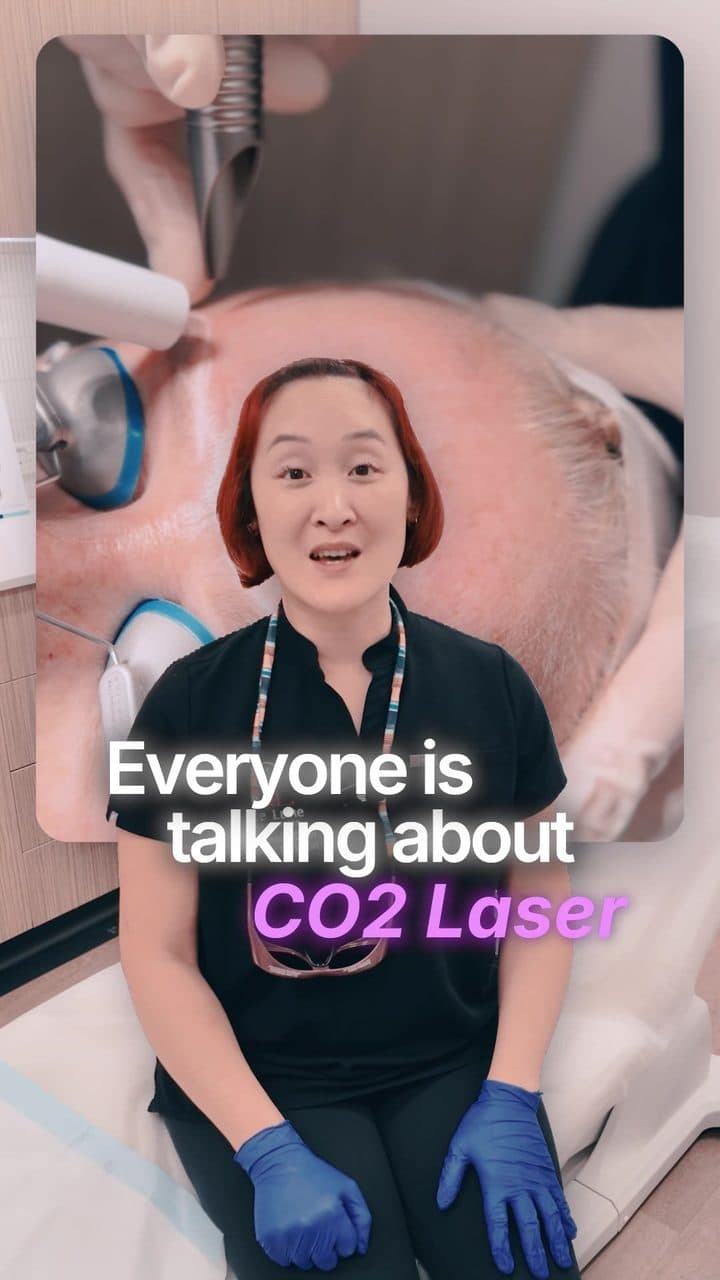
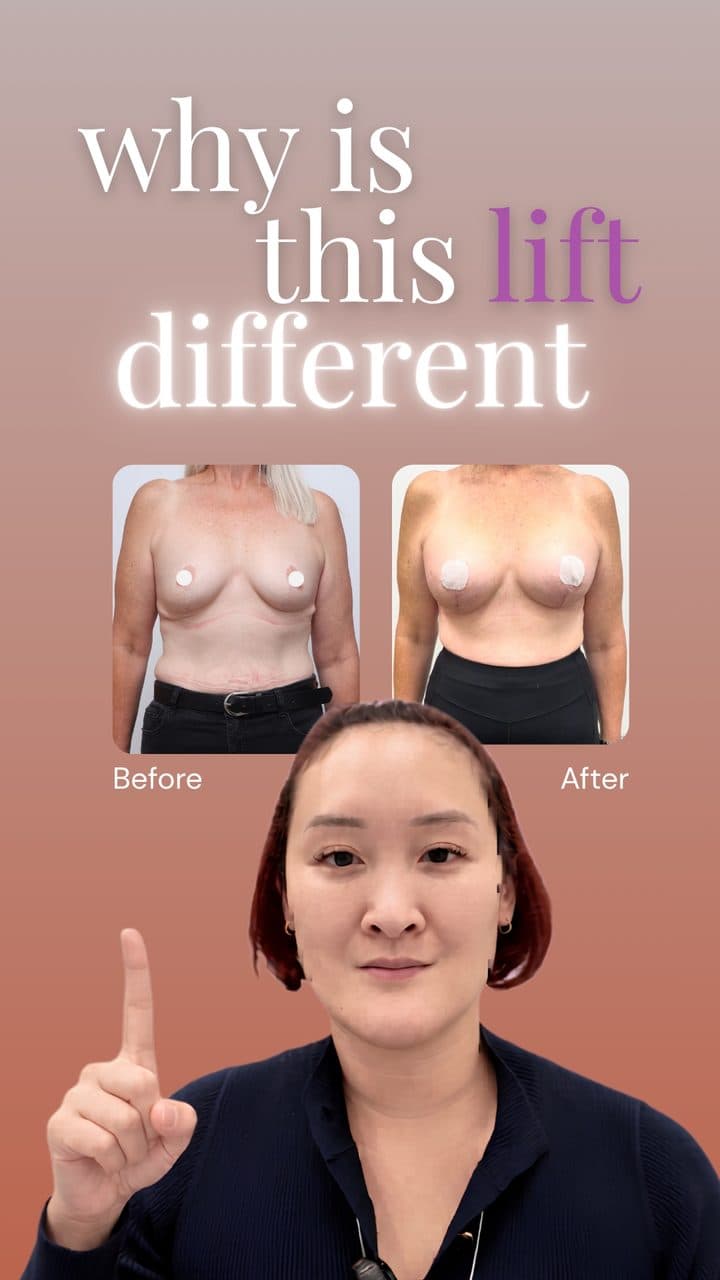
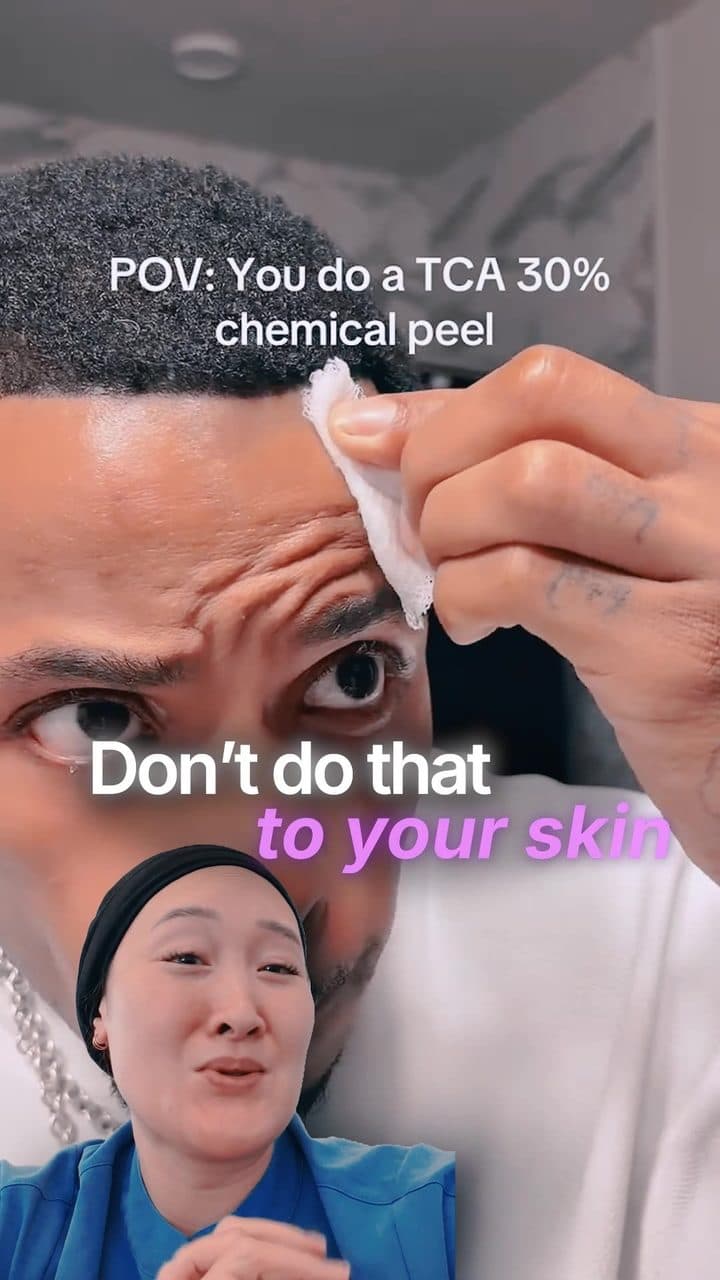
Dr Marion Chan's clinic account was averaging five likes a post when we started. Over ten weeks the 45 videos we produced reached 554,341 people, and one reel about Australia's advertising rules was played 987,251 times. Her personal account went from 12,043 to 36,236 followers. Read the full case study.
What we are giving away here, and why
Hormozi's rule is to give away the secrets and sell the implementation. Free content should fully solve the understanding problem, so that when someone checks your profile they find a library of answers rather than a teaser ($100M Leads, p. 75 and p. 84). That is why this page has the questions, the template, the run sheet and the schedule. What we sell is never touching a camera, a script file or a scheduling tool.
The second rule is volume. Once one good unit of content works, the game is more units ($100M Leads, p. 85). 144 is the floor. 12 a month keeps a clinic visible; 16 to 20 a month is healthy for a growth-stage clinic, and the extra pickups and b-roll from the shoot day are what get you there.
The third is proof, and aesthetics has its own version of the Acquisition.com Proof Checklist (p. 31). Show beats tell. Raw beats processed, so a phone clip of a patient's reaction at the reveal outperforms a cinematic edit. Patients who look like the dream avatar beat patients who do not. Lots beats one. We wire that in at three points: at intake we mine the top ten cases, at scripting each case becomes two story scripts, and at edit testimonials stay raw unless compliance has to trim them.
The quarterly Patient Story Day
The shoot day itself can be a lead magnet. Once a quarter, invite six to eight of your best patients for complimentary skincare or a touch-up in exchange for telling their story on camera. Everyone who applies joins a waitlist, and the patients you do not select get an assessment offer. One day produces content, testimonials and a list of warm leads (Acquisition.com Marketing Machine playbook, p. 26), and the best of those leads get the most follow-up (Lead Nurture, p. 28). Every patient on camera signs written consent that covers where the footage can run and for how long, and anyone can withdraw it.
Shoot-day checklist
- Intake done: 20 questions answered and top three treatments agreed
- 140 to 150 scripts approved, including the clinical compliance pass
- Three outfits chosen: white coat, neutral top, darker top. Plain colours, no logos, no fine stripes
- Three sets ready: consult room, procedure room, plain wall
- Two lights, tripod, teleprompter and lavalier tested on a short call the week before
- Laptop with scripts open and a cloud backup
- Stool with a back, power strip, gaffer tape, blotting papers, lip balm
- Printed consent signed for anyone else on camera, plus the shot list
- Tracking sheet of must-have scripts to check at the 2:30 break
- Four to six hours blocked with no patients booked
Where this comes from
- This is our own production process as we run it for clients. The intake questions, script template, run sheet, kit and approval workflow are the documents we use
- The content unit, the give-away-the-secrets rule and the volume rule are from Alex Hormozi, $100M Leads, p. 75 to 76, p. 84 and p. 85. The proof hierarchy is from the Acquisition.com Proof Checklist, p. 31. The Patient Story Day idea is adapted from the Acquisition.com Marketing Machine playbook, p. 26, and Lead Nurture, p. 28
- The posting times, bucket ratios and 24-video batch sizes are our working rules. They are a starting point for a local clinic and the monthly review adjusts them
- The Dr Marion Chan numbers are from the ten-week period covered in her case study
Questions owners ask
How long does a med spa content shoot take?+
Four to six hours of filming for a year of short videos, plus a 90-minute intake beforehand. Scripts are written in advance so the day runs in half-hour blocks.
How many videos can you get from one filming day?+
With 140 to 150 scripts prepared, one day typically yields enough for at least 12 finished videos a month for twelve months.
How many scripts do you write for one filming day?+
140 to 150. Each is 45 to 80 words and 20 to 45 seconds, grouped into blocks of 18 per outfit so the day runs without stopping to decide what comes next. Not every script makes the final cut, which is why we write more than 144.
What should an injector wear for a content shoot?+
Three outfits, changed between blocks: a white coat, a neutral top and a darker top. Plain colours, no logos, no busy patterns or fine stripes, which shimmer on camera. Each change makes a block look like a different day.
Does the shoot have to be in person?+
No. We direct remotely with a teleprompter. You need a quiet room, decent light, a phone or camera on a tripod and a lapel mic.
Won't a year of content filmed in one day look repetitive?+
Not if you change outfit and set between blocks and keep the five-bucket ratio: rules, myths, case stories, safety and offers.
Who should be on camera at a med spa?+
The provider patients will actually see. Patients choose a person, not a logo.

Written by Benjamin Chua
Founder of Trueframe and Med Spa Launch. Nine years building video systems for founders and clinics, including a Melbourne plastic surgeon whose account went from 12,043 to 36,236 followers in ten weeks.
Keep reading
Botox and fillers in a dental practice: what you can market in your state, and the Smile & Face plan that turns hygiene visits into aesthetics consults
Read the guide
Med spa marketing compliance: which rule governs every ad, post, photo, review and text, in one map
Read the guide
How to choose a med spa marketing agency: the 7-line scorecard, 15 interview questions, red flags and the contract terms that protect you
Read the guide